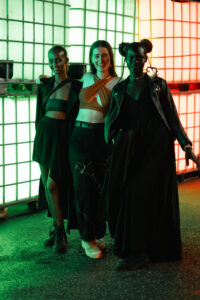

With a thoughtful approach to DJing that prioritizes atmosphere, discovery, and connection, Max Tassan has become a familiar presence within East Africa’s growing electronic landscape. In this conversation, she reflects on the evolution of Rwanda’s scene, the importance of regional collaboration, and the opportunities and challenges facing the next generation of underground artists.
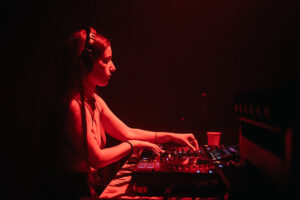
For those discovering you for the first time, who are you as an artist, and how would you describe your sound in your own words?
Hey, I’m Natacha, known as Max Tassan. I was born in France and arrived in East Africa in 2025. I learned DJing in 2024 when I was teaching French in Uzbekistan. I usually say I’m a house and techno DJ, my style is constantly evolving and I love to vary genres. These days I’ve been playing deep techno, dub techno, deep house and tech house. I’m always fond of textures, subtle melodies. I love to play with rhythms and mix mostly instrumental tracks with a heavy use of loops to allow flow and meditation through music. You usually won’t find tracks you already know so that the focus remains on the listening experience.
DJing is very introspective for me. People comment a lot on my resting face when I play or dance, I’m just in my zone and I wish the same to the audience. As much as we are all in the same room, everyone has their own experience. I remember a summer where I got high from the music in both a psytrance and a metal festival. Sobriety has always allowed me to experience music to the fullest, and it’s been helping me to stay focused in this scene that can be intense and depressing. We all share a dancefloor while trying to escape our own demons. I started DJing after a hard breakup and it really saved me. I hope my music heals people as much as it healed me.
How would you describe the current state of the electronic music scene in Rwanda? Where is it strong, and where is it still developing?
I love Kigali’s scene because there are always new event concepts, new locations opening. Kamahwa is an unmissable hideout for after work and outdoor events, mundi center is a modular venue, perfect to have a space that grows with its audience. Atmosfera has made more than a thousand people dance to Afrohouse and proved that Kigali is showing up for events. Resonator has been showing something different with underground music and a minimalist scenography.
Everything is possible in Kigali at the moment, the market starts to understand the value and potential of electronic music, the DJs need to be ready for it. We lack infrastructures, and mostly gear. You rarely find standalones on the booths. It’s a vicious circle, the access to industry-standard equipment and training facilities remains limited. It makes it challenging for DJs who want to develop their skills, there are no proper studios or places to learn and train, and controllers are still the standard equipment in Rwanda so there’s no point in learning a different way.
As the scene keeps expanding, creating more opportunities for practice, mentorship from the first wave of DJs and experimentation could help unlock more creativity. Fees are decent here and DJing might look like easy money, but we can’t sacrifice the basic technical skills and only count on vibes and stage presence although appearance counts a lot nowadays. The artists that really put in the work, both technically and humanly, are rewarded in my opinion. They gain visibility and trust from event organizers and from the public in the long run.
The sponsors are slowly getting interested in electronic events. The events need support from brands without having to give away their identity, collaborations tend to be profit driven unfortunately. I hope that the government will also invest in artists because the ideas and talents are here. Artists need support and sustainable infrastructures. Hopefully, there will also be more women and queer DJs on line-ups like Nairobi and Kampala have managed to do. There are very few Rwandan techno DJs as well; foreigners often DJ as a hobby while having a full time job and access to gear from Europe or America, the access gap to this career is gigantic. I had the opportunity to mentor the opening DJ for our all-female line-up with Resonator, local interest exists for alternative electronic music, and the scene will benefit from open calls to attract people who are not already in the established circles, as well as spaces easily and financially accessible. Lyynduh has created a safe space for women to learn with Elle Kwa Mziki since 2022, and K’RU has been pushing the culture by organizing open decks and workshops with Pineapple Undertones.
How did you personally enter the electronic music space in Rwanda? Was there a specific moment, space, or community that shaped you?
I arrived in early 2025 and attended a few events to get to know what’s played in the city .The DJs were super welcoming, and I first played with Boben, who trusted my work. Then I met the Resonator team at one of their events and they are always super keen to have new techno DJs as the scene is minimal here. I ended up playing at 4 of their events and even got the chance to organize a collaboration with the Techno collective Femme Frequencies from Uganda. Seeing the attendance growing over time with more regulars and Rwandans really taught me how to set the tempo and vibe in parties that end at 2am with short sets. I learned a lot from the different parties I played at : Fiesta taught me how to convince an audience that is not yours within 20minutes, the battle was such a fun format ! Atmosfera was my biggest audience, and Resonator a free space to express myself with deep techno, breaks and even psytrance.
You’ve performed in Uganda and Kenya. What differences have you noticed between the scenes? How does each audience respond to electronic music?
I’ve loved Uganda for their openness to experimentation and alternative genres. You can find techno, bass, disco, gqom, experimental music and the community is always eager to see something different. You can really see the influence of Nyege Nyege on the audience. Underground Kampala and Femme Frequencies imported the essence of techno in the city.
All those scenes are bubbles in the capital cities and although not many people know about them outside the community, it’s also a guarantee for a safe space where alternative and queer people can be themselves. Some good places are best kept secret !
Kenya’s scene is so inspiring, the coast and Nairobi have their own identities and the possibilities are endless. People have access to international level clubs and good quality of sound and gear. `In the genres I play, I feel there’s still some space for new artists and I love the variety of genres that can be found other than Afro House. Just like Kigali, there is so much FOMO because of the number of events (that gather the same people) clashing, that people hop from venue to venue and we’re losing the essence of curated nights. Audiences are often split between two or three venues which makes it harder to develop a deeper connection between the artists and the listeners.
In Kigali, I’ve tried to find a balance in the energy of my sets. The crowds are mixed, foreigners expect the techno they could find back home and Rwandans are still new to it, focusing on melodies and rhythms to bring familiarity helps a lot.
What role do you think regional collaboration plays in strengthening East Africa’s underground movement? What have you learned from engaging beyond Rwanda?
There are many DJs and promoters that have been investing so much in the scene to invite regional or international artists and this is a chance for both the audience and the artists to get used to something else, as well as a push for further collaborations and opportunities for local DJs abroad. Seeing an eye-opening artist live is such a sweet way to start exploring new sounds and new techniques.
Each country has its own identity, and that has taught me to be flexible, both musically and professionally. Musically, there is always a balance to find between the tracks you love and the energy a particular audience responds to. For example, the community in Uganda tends to embrace more intense sounds than the one in Rwanda. The same set rarely works the same way between both scenes
Beyond the music, adapting to different working conditions has been just as important. I’ve been fortunate to perform across the region because I was already travelling and able to be flexible with logistics and budgets. Like many creative industries, the electronic and underground music and ecosystems are still developing. Building a sustainable career here often requires a lot of resourcefulness, community support and mobility of course.
That’s why regional collaboration is so important in my opinion. While large budgets are usually reserved for a small number of guest artists, DJs and promoters can make the scene stronger by inviting, supporting and creating opportunities for one another. Those exchanges are precious and help artists gain visibility, strengthen their network and contribute to the development of the community in the long run.
What challenges do producers and DJs in Rwanda currently face — infrastructure, education, audience building? What needs to happen for the scene to mature sustainably?
I can only think of a handful of active electronic music producers and vocalists working in Rwanda at the moment. But I believe that will change as the scene continues to develop. DJs and organizers face practical challenges as well. Most events have to end by 2 a.m, while audiences often arrive quite late. People are becoming open to new genres, yet attendance can still be unpredictable, which means organizers constantly have to adapt. I’ve seen international artists perform to surprisingly small crowds, and it can be difficult for organizers who have invested their time, energy and resources to make those events happen.
Building an audience takes time, and maintaining momentum requires strong concepts and consistent quality.
In my experience, the best way to retain people is to offer an authentic and memorable experience. The interest is here and growing. Rwanda grows at a fast pace, and so is the electronic scene here. Bigger access to infrastructure, equipment, training and community spaces, as well as financial support could help create a more sustainable community for creatives and organizers who have the same vision.
Where do you see yourself — and Rwanda’s electronic music scene — in the next five years?
Rwanda is the place to be right now. The scene and community are growing and open to new faces and sound. Kigali offers a space for experimentation, while Nairobi and Kampala are more established scenes with their own niches and challenges. Producers, DJ, and Sponsors who want to invest their time and money, now is the perfect time to create a training studio, a DJ school or a Club to host electronic music with international standards.
As for me, the furthest I can see is one year ahead. My time in Kigali is unfortunately done for now, and I’ve already started touring in Uganda and Kenya. In the coming year I’m planning to explore the scenes and collectives of Europe, Eastern and Southern Africa, as well as coming back to Central Asia next summer. I’ll balance teaching and DJing to keep travelling at a slow pace.