TCHNO


Author Posts
Interviews

Between Borders and Beats: A Conversation with Max Tassan

June 23, 2026

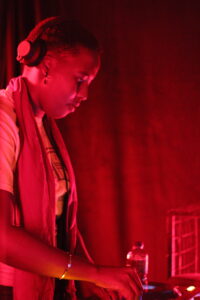
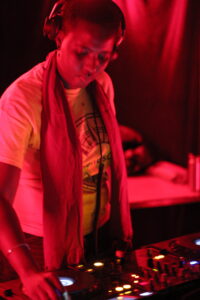
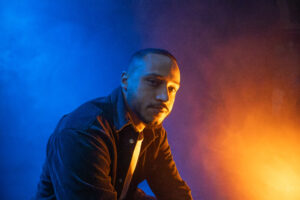
With a thoughtful approach to DJing that prioritizes atmosphere, discovery, and connection, Max Tassan has become a familiar presence within East Africa’s growing electronic landscape. In this conversation, she reflects on the evolution of Rwanda’s scene, the importance of regional collaboration, and the opportunities and challenges facing the next generation of underground artists.

For those discovering you for the first time, who are you as an artist, and how would you describe your sound in your own words?

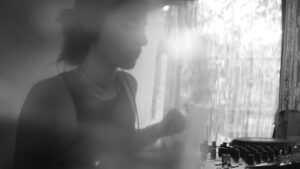
Hey, I’m Natacha, known as Max Tassan. I was born in France and arrived in East Africa in 2025. I learned DJing in 2024 when I was teaching French in Uzbekistan. I usually say I’m a house and techno DJ, my style is constantly evolving and I love to vary genres. These days I’ve been playing deep techno, dub techno, deep house and tech house. I’m always fond of textures, subtle melodies. I love to play with rhythms and mix mostly instrumental tracks with a heavy use of loops to allow flow and meditation through music. You usually won’t find tracks you already know so that the focus remains on the listening experience.

DJing is very introspective for me. People comment a lot on my resting face when I play or dance, I’m just in my zone and I wish the same to the audience. As much as we are all in the same room, everyone has their own experience. I remember a summer where I got high from the music in both a psytrance and a metal festival. Sobriety has always allowed me to experience music to the fullest, and it’s been helping me to stay focused in this scene that can be intense and depressing. We all share a dancefloor while trying to escape our own demons. I started DJing after a hard breakup and it really saved me. I hope my music heals people as much as it healed me.

How would you describe the current state of the electronic music scene in Rwanda? Where is it strong, and where is it still developing?

I love Kigali’s scene because there are always new event concepts, new locations opening. Kamahwa is an unmissable hideout for after work and outdoor events, mundi center is a modular venue, perfect to have a space that grows with its audience. Atmosfera has made more than a thousand people dance to Afrohouse and proved that Kigali is showing up for events. Resonator has been showing something different with underground music and a minimalist scenography.

Everything is possible in Kigali at the moment, the market starts to understand the value and potential of electronic music, the DJs need to be ready for it. We lack infrastructures, and mostly gear. You rarely find standalones on the booths. It’s a vicious circle, the access to industry-standard equipment and training facilities remains limited. It makes it challenging for DJs who want to develop their skills, there are no proper studios or places to learn and train, and controllers are still the standard equipment in Rwanda so there’s no point in learning a different way.

As the scene keeps expanding, creating more opportunities for practice, mentorship from the first wave of DJs and experimentation could help unlock more creativity. Fees are decent here and DJing might look like easy money, but we can’t sacrifice the basic technical skills and only count on vibes and stage presence although appearance counts a lot nowadays. The artists that really put in the work, both technically and humanly, are rewarded in my opinion. They gain visibility and trust from event organizers and from the public in the long run.

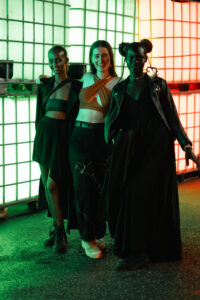
The sponsors are slowly getting interested in electronic events. The events need support from brands without having to give away their identity, collaborations tend to be profit driven unfortunately. I hope that the government will also invest in artists because the ideas and talents are here. Artists need support and sustainable infrastructures. Hopefully, there will also be more women and queer DJs on line-ups like Nairobi and Kampala have managed to do. There are very few Rwandan techno DJs as well; foreigners often DJ as a hobby while having a full time job and access to gear from Europe or America, the access gap to this career is gigantic. I had the opportunity to mentor the opening DJ for our all-female line-up with Resonator, local interest exists for alternative electronic music, and the scene will benefit from open calls to attract people who are not already in the established circles, as well as spaces easily and financially accessible. Lyynduh has created a safe space for women to learn with Elle Kwa Mziki since 2022, and K’RU has been pushing the culture by organizing open decks and workshops with Pineapple Undertones.

How did you personally enter the electronic music space in Rwanda? Was there a specific moment, space, or community that shaped you?

I arrived in early 2025 and attended a few events to get to know what’s played in the city .The DJs were super welcoming, and I first played with Boben, who trusted my work. Then I met the Resonator team at one of their events and they are always super keen to have new techno DJs as the scene is minimal here. I ended up playing at 4 of their events and even got the chance to organize a collaboration with the Techno collective Femme Frequencies from Uganda. Seeing the attendance growing over time with more regulars and Rwandans really taught me how to set the tempo and vibe in parties that end at 2am with short sets. I learned a lot from the different parties I played at : Fiesta taught me how to convince an audience that is not yours within 20minutes, the battle was such a fun format ! Atmosfera was my biggest audience, and Resonator a free space to express myself with deep techno, breaks and even psytrance.

You’ve performed in Uganda and Kenya. What differences have you noticed between the scenes? How does each audience respond to electronic music?

I’ve loved Uganda for their openness to experimentation and alternative genres. You can find techno, bass, disco, gqom, experimental music and the community is always eager to see something different. You can really see the influence of Nyege Nyege on the audience. Underground Kampala and Femme Frequencies imported the essence of techno in the city.

All those scenes are bubbles in the capital cities and although not many people know about them outside the community, it’s also a guarantee for a safe space where alternative and queer people can be themselves. Some good places are best kept secret !

Kenya’s scene is so inspiring, the coast and Nairobi have their own identities and the possibilities are endless. People have access to international level clubs and good quality of sound and gear. `In the genres I play, I feel there’s still some space for new artists and I love the variety of genres that can be found other than Afro House. Just like Kigali, there is so much FOMO because of the number of events (that gather the same people) clashing, that people hop from venue to venue and we’re losing the essence of curated nights. Audiences are often split between two or three venues which makes it harder to develop a deeper connection between the artists and the listeners.

In Kigali, I’ve tried to find a balance in the energy of my sets. The crowds are mixed, foreigners expect the techno they could find back home and Rwandans are still new to it, focusing on melodies and rhythms to bring familiarity helps a lot.
What role do you think regional collaboration plays in strengthening East Africa’s underground movement? What have you learned from engaging beyond Rwanda?

There are many DJs and promoters that have been investing so much in the scene to invite regional or international artists and this is a chance for both the audience and the artists to get used to something else, as well as a push for further collaborations and opportunities for local DJs abroad. Seeing an eye-opening artist live is such a sweet way to start exploring new sounds and new techniques.

Each country has its own identity, and that has taught me to be flexible, both musically and professionally. Musically, there is always a balance to find between the tracks you love and the energy a particular audience responds to. For example, the community in Uganda tends to embrace more intense sounds than the one in Rwanda. The same set rarely works the same way between both scenes

Beyond the music, adapting to different working conditions has been just as important. I’ve been fortunate to perform across the region because I was already travelling and able to be flexible with logistics and budgets. Like many creative industries, the electronic and underground music and ecosystems are still developing. Building a sustainable career here often requires a lot of resourcefulness, community support and mobility of course.

That’s why regional collaboration is so important in my opinion. While large budgets are usually reserved for a small number of guest artists, DJs and promoters can make the scene stronger by inviting, supporting and creating opportunities for one another. Those exchanges are precious and help artists gain visibility, strengthen their network and contribute to the development of the community in the long run.

 What challenges do producers and DJs in Rwanda currently face — infrastructure, education, audience building? What needs to happen for the scene to mature sustainably?

I can only think of a handful of active electronic music producers and vocalists working in Rwanda at the moment. But I believe that will change as the scene continues to develop. DJs and organizers face practical challenges as well. Most events have to end by 2 a.m, while audiences often arrive quite late. People are becoming open to new genres, yet attendance can still be unpredictable, which means organizers constantly have to adapt. I’ve seen international artists perform to surprisingly small crowds, and it can be difficult for organizers who have invested their time, energy and resources to make those events happen.

Building an audience takes time, and maintaining momentum requires strong concepts and consistent quality.

In my experience, the best way to retain people is to offer an authentic and memorable experience. The interest is here and growing. Rwanda grows at a fast pace, and so is the electronic scene here. Bigger access to infrastructure, equipment, training and community spaces, as well as financial support could help create a more sustainable community for creatives and organizers who have the same vision.

 Where do you see yourself — and Rwanda’s electronic music scene — in the next five years?

Rwanda is the place to be right now. The scene and community are growing and open to new faces and sound. Kigali offers a space for experimentation, while Nairobi and Kampala are more established scenes with their own niches and challenges. Producers, DJ, and Sponsors who want to invest their time and money, now is the perfect time to create a training studio, a DJ school or a Club to host electronic music with international standards.

As for me, the furthest I can see is one year ahead. My time in Kigali is unfortunately done for now, and I’ve already started touring in Uganda and Kenya. In the coming year I’m planning to explore the scenes and collectives of Europe, Eastern and Southern Africa, as well as coming back to Central Asia next summer. I’ll balance teaching and DJing to keep travelling at a slow pace.

CONNECT with Max Tassan
Interviews

East Africa’s Shared Techno Future: A dialogue with Femme Frequencies

June 14, 2026

In an era where underground electronic music is increasingly shaped by community, collaboration, and cultural exchange, new voices are redefining what the future of techno can look like. Among them is Femme Frequencies, a collective operating across borders and challenging conventional narratives around who gets seen, heard, and celebrated within the scene.

We spoke with Femme Frequencies about the realities of nurturing underground culture across continents, the importance of regional solidarity, and the possibilities that emerge when artists create their own pathways.

For readers discovering you for the first time, who is Femme Frequencies — and what core intention drives the collective?

Femme Frequencies is a platform dedicated to increasing visibility and creating opportunities for female techno DJs, both locally and globally. It was founded with the goal of supporting and strengthening the electronic music scene in East Africa while building meaningful connections with the global techno community.

At its core, Femme Frequencies exists to amplify female techno DJs, foster a stronger and more inclusive techno culture, and contribute to the growth of the East African techno scene. 

(Founders: M4ryland and Anitraxx)

Femme Frequencies operates between Uganda and Oslo. How did this cross-continental identity form, and how has it shaped your sound and philosophy?

Femme Frequencies operates between Uganda and Oslo because of our founder’s connection to both places. This cross-continental identity formed naturally through movement, collaboration, and shared community. It has shaped our sound and philosophy by blending raw East African underground energy with the structured, experimental European scene creating a bridge between worlds. 

What differences and similarities do you observe between the underground scenes in East Africa and Norway? Where do they challenge or inspire each other?

East Africa’s underground scene is growing fast; it’s hungry, experimental, and community-driven. Norway’s scene is more established, with stronger infrastructure and institutional support. The challenge in East Africa is access and space, while in Norway it’s about pushing boundaries. Both inspire each other: one brings urgency and growth, the other brings structure and sustainability.  

You’ve collaborated with TCHNO and performed in Nairobi. What stood out to you about engaging with the Kenyan scene, and how do collaborations strengthen regional movements?

Collaborating with TCHNO and performing in Nairobi showed us how strong and connected the underground community is. There’s real passion and solidarity. Collaborations strengthen regional movements because they create visibility, shared audiences, and artist exchange helping us grow together instead of separately. 

(Monrhea and M4ryland at TCHNO)

As a female techno collective, what structural gaps were you responding to when you formed? What did you feel was missing, and how are you actively reshaping that?

We formed in response to structural gaps: the male-dominated industry, lack of visibility for female techno DJs, and limited spaces to play this genre. Event organizers often prioritize more mainstream or familiar genres, leaving techno especially women in techno with fewer opportunities. We are actively reshaping that by creating our own platforms, curating our own lineups, and building a growing movement. 

Beyond events and gigs, what are you building long-term? Education, mentorship, label work, touring circuits — what does the next phase look like for Femme Frequencies?

Our mission has expanded globally, but our goals remain the same: to create a strong platform for female techno DJs and uplift the East African scene. Long-term, we are building artist exchanges, DJ and production education, mentorship programs, future label work, touring circuits, and artist management. It’s about sustainability, not just events.

If you could define the future of women in underground techno in one intention or action, what would it be?

The future of women in underground techno is ownership. Owning our spaces, our sound, our platforms, and our networks. This is not just a project, it’s a movement, and it’s growing rapidly.

(NANGOBI, M4ryland, Goddess)

CONNECT TO FEMME FREQUENCIES:

Insights

When The Story Stops: How DJ Storytelling Shapes The Politics of The Dancefloor

May 24, 2026

By Cheyenne Hanspal

At its best, the dancefloor was never simply a place to dance. It was a temporary
reorganization of reality — a space where identities loosened, time expanded, and new
forms of relation became possible through sound.

In the early days of house and techno, especially in Chicago basements and Detroit
warehouses, these spaces emerged not just as entertainment venues but as
infrastructures of survival for Black, and working-class communities excluded from
dominant social life. The dance floor offered more than escape. It offered the possibility of another way of being together as a community.

What made these spaces transformative was not only who occupied them, but how they
were structured through sound and time.

Today, however, something fundamental is shifting.

Across the global circuit of festivals and large-scale club events, the form of the night has
changed. Lineups now feature dozens of DJs playing tightly compressed 60–90 minute
sets. Music is increasingly optimized for immediacy: harder drops, faster pacing,
recognizable tracks and constant peaks.

The expectation is clear: capture attention instantly, sustain intensity continuously, and
never allow the energy to fall.

In this transition, something deeper than musical style is being lost. What is disappearing is the narrative function of DJing itself — and with it, part of the dance floor’s political and social potential.

The dance floor as a space of possibility

To understand what is at stake, we must return to the origins of the culture. The Techno
culture.

Figures like Frankie Knuckles and Larry Levan were not simply selectors of records. They were architects of temporal experiences. Their sets unfolded slowly across entire nights, guiding dancers through emotional states that could not be rushed.

These nights functioned as more than parties. They created conditions under which people could encounter themselves and others differently.

House music, as Honey Dijon has repeatedly emphasized, emerged from spaces of Black and queer resistance — spaces built precisely because mainstream society offered no room for those communities to exist freely.

Within these environments, the dancefloor became what queer theorist José Esteban
Muñoz described as a kind of utopian rehearsal: a temporary glimpse of a world not yet
fully realized.

But this possibility did not emerge abstractly. It was produced materially through listening, duration, and collective immersion.

DJing as Narrative and Relational Practice

In its original form, DJing was fundamentally narrative.

A set was not a sequence of tracks designed for immediate reaction. It was an unfolding
emotional architecture with gradual tension, unexpected detours, moments of intimacy, release, stillness, and return.

The DJ listened as much as they played. The crowd shaped the direction of the set
through movement, energy, and response. Together they formed a feedback loop — a
collective process of world-building through sound.

As Laurent Garnier has argued, a great set is about “telling a story, not just playing
records.”

That story required time. And time mattered politically.

Long-form immersion allowed trust to emerge between strangers. It allowed dancers to
settle into uncertainty, to move beyond self-consciousness, and to inhabit the space
collectively rather than merely consume it individually.

Listening became more than perception. It became relation.

Sound, unlike visual systems, resists fixed boundaries. It spills, overlaps, reverberates,
and dissolves distinctions between bodies. On the dance floor, this produced what
philosopher Salomé Voegelin describes as a plural and unstable field of possibility — a
space where identity could become fluid rather than fixed, where people encountered one another not through rigid categories but through shared sensation and collective duration.

The political power of the dance floor emerged precisely from this openness.

The Rise of the “Banger Economy”

Today, that openness is increasingly under pressure.

Large-scale festivals and commercial club circuits have reorganized DJ culture around
acceleration, visibility, and spectacle. Instead of immersion, we encounter compression.
Instead of journeys, we encounter sequences of peaks engineered for immediate impact.

DVS1 has been one of the clearest critics of this transformation. Reflecting on the
“ festivalization ” of techno, he argues that DJs are increasingly incentivized to chase
singular moments of reaction rather than construct long-form experiences.

This dynamic has produced what many describe as a “banger economy”: a system where tracks are valued according to instant recognizability, crowd response, and viral circulation.

The result is not simply aesthetic homogenization. It is a collapse of temporal depth itself.

Sets become interchangeable. Risk disappears. Ambiguity disappears. Silence
disappears.

And with their disappearance, the dancefloor loses some of its capacity to generate
alternative social relations.

The Politics of Time

At the center of this transformation lies a deeper political question: the organization of
time.

Earlier underground scenes operated according to a more fluid temporality. Nights
stretched unpredictably. Energy rose and fell organically. Time was inhabited rather than
managed.

Contemporary festival culture increasingly mirrors the logic of late capitalism: optimization, efficiency, segmentation, constant stimulation.

As Guy Debord argued, modern capitalism transforms lived experience into spectacle —
something consumed externally rather than inhabited collectively.

On the dance floor, this logic manifests in subtle but powerful ways.

Shorter sets interrupt emotional continuity. Without continuity, trust weakens. Without trust, vulnerability becomes more difficult. The conditions that once enabled queer expression, interracial intimacy, emotional risk, and collective release become increasingly fragile.

What remains is often an experience of surface intensity without deeper transformation:
visually spectacular, sonically relentless, but extremely thin at the social level.

The issue is not simply that music has become faster or harder. The issue is that
acceleration leaves little room for listening.

And listening — in its deepest sense — is what once allowed the dance floor to exceed the logic of consumption.

When the Story Stops

The disappearance of storytelling has consequences beyond music itself.

Narrative DJing created continuity. Continuity created relational depth. Through that depth, dancers could temporarily escape the fixed identities and social roles imposed outside the club.

The dance floor became political not because it represented ideology directly, but because it enabled the experience of plurality — the sensation that reality itself could be organized differently.

.Without sustained narrative: the crowd resets every hour, immersion fragments, emotional memory weakens, and collective experience becomes increasingly difficult to sustain.

As Ben UFO has noted, environments built around constant intensity often leave little room for exploration, subtlety, or genuine diversity in sound.

The dance floor risks becoming less a participatory social space and more a consumable audiovisual product.

Resistance in the Underground

Yet this transformation is not total.

Across smaller scenes and community-led spaces, artists and collectives continue
resisting the acceleration of club culture. All-night-long sets are returning. Intimate venues are prioritizing curation over scale, immersion over spectacle, and listening over constant stimulation.

Figures like Honey Dijon and DVS1 continue advocating not for nostalgia, but for the
preservation of the social and political conditions that once made underground culture
transformative.

What is at stake is not simply how music is played, but what kinds of worlds become
possible through it.

The Future of the Dance floor

If early house and techno culture offered the dance floor as a site of political and emotional possibility, then the current moment forces an urgent question:

Can spaces of collective transformation survive under conditions of acceleration,
commodification, and spectacle ?

Or, put differently: If the story disappears, what happens to the world it once allowed
people to imagine together ?

Perhaps the answer lies in reclaiming time itself: stretching it, slowing it down, allowing
silence, uncertainty, allowing sound once again to breathe.

Because the politics of the underground were never only about representation or identity.

They were about creating conditions where something else could emerge between people— fleetingly, imperfectly, but genuinely — through time, intentional listening, and shared presence.

And that remains a possibility worth protecting.

Interviews

The Evolution of Budalagi and Insights on Building Nairobi’s Techno Scene

March 22, 2026

Monrhea: Kindly introduce yourself.

Budalagi: I am Felix Mwita, aka Budalagi, and I am a DJ, Producer, and cultural worker based in Nairobi.

Monrhea: Why “Budalagi”?

Budalagi: Budalagi comes from my gamer tag. Not too long ago I was deep in the online gaming community. I played a lot of GTA—before the pandemic and especially during it. That’s basically all I did beyond school: make music and play games. And I didn’t have the best Internet, so when you’re playing with your friends, the stream would lag a lot. To sum it up, my gamer tag came from my city Internet connection.

Does that “lag” interpret anywhere else in your life—maybe the scene, maybe your journey?

I can definitely get philosophical about that. For me it was about the lagginess—the uptake. When I was starting out, I had a very specific point of view in terms of the music I wanted to hear. I was looking around while making my own music. I’m very introverted, so all I did was go to school, make music, and keep an ear out for parties I’d actually feel comfortable attending. There weren’t many. Some were close to what I wanted to hear, but eventually I had to accept that there’s no perfectly fitting love for you musically—you have to make it. So it became about compromise: finding something aligned enough to be a gateway to what I envisioned.

I wouldn’t say the scene was lagging, but I felt like, “Come on, there’s so much more out there.” More to explore. More sounds to hear beyond the usual. So for me, the lag was collective—this comfort zone, the lack of progressive progressiveness. You’re lagging.

The scene isn’t necessarily lagging in the obvious sense. But personally, I’m aware that I might be lagging in some respects. I have a vision, a mission, an emotional point I want the Nairobi scene to reach. And I feel like that might be lagging too.

So the lag is twofold: frustrations with the scene, and my own stubbornness—this refusal to accept or conform to experiences or emotions that don’t speak to me. I will always lag behind when it comes to conforming to things misaligned with my spirit.

Were you always into electronic music? What’s your story?

My earliest experiences with music were through the radio. My folks had one at home, and whatever they played is what you listened to. A lot of Lingala, old Congolese jazz—my dad loved that. From there it progressed to TV. We had shows like The Beat and other afternoon music shows. I’d come home from school and that’s what would be on. Over time, the music shifted more toward house—music with vibe and flow. And something sparked in me. The intros, the kick, the heartbeat—it was structured, groovy, and it spoke to me. But I didn’t have the language for electronic music yet.

In those days, the exposure was very mainstream. You’d hear an Avicii tune here, some mid-2000s pop-electronic there, Europop influences. There was also what people here called “old school house”—something DJs leaned into. It resonated because it had been popular in the ’90s and ’80s, so our parents had some connection to it. From there, I realized there was this whole world of music built around a four-on-the-floor beat, a kick, a club heart in the bassline, synths. I just kept digging.

I discovered techno and all its subgenres. And I never settled. I’m always curious—looking for the next mutation of the music. I’ve always struggled with the idea of picking one niche subgenre and staying there forever.

Whatever’s in your mind, you can translate it into music. That’s what production became for me: satisfying myself. Making the kind of music I want to hear. Music that speaks to me deeper than words. It became self-expression, a reflection of my taste and identity.

At the core, that’s what artists do—we express ourselves. It’s deeply gratifying to create music I genuinely believe in. And I’ve been intentional about playing my own tracks in my sets. That was always the plan: make music I want to hear played out. That’s my journey, and it’s still evolving.

But once I started making music, I quickly encountered the challenges of navigating a system not always built for artists like me. And then you have to decide: am I going to be helpless and cry about it, or am I going to do something?

So now I’m working on multiple fronts: making music, engaging with the cultural side, the industry side, finding a balance between making the art and shaping the ecosystem around it. It’s not easy. But it’s necessary. That’s just the reality.


Let’s dive deeper into techno.

Mm-hmm.

How would you explain techno to someone, especially the sub-genres you play?

Experiential. It’s an experience before it’s a genre. The sound I play sits in that deep, hypnotic, raw pocket. Very percussive. Very groove-driven. Hard-groove adjacent, if you’re doing your research. But the truth is: it’s contextual. Techno needs a curated space and a curated crowd. The experience makes the music as much as the music makes the experience. My sound is raw, groovy, deep, intricate. Emotional too. When I’m playing, it feels instinctive—almost like going back to something natural.

Techno can also appeal to introverts.

Exactly. It celebrates individualism as much as it celebrates collectivism. Wherever you sit on that spectrum, there’s room for you. In those dark rooms—lit or unlit—no one cares about how you look dancing. The crowd is connected to the music, and people lose themselves in it. It works beautifully for introverts.

From a production point of view—what makes a groove?

For me, it’s polyrhythms. Groove is in the unpredictability. Percussion and syncopation—those are the engines. Syncopation lets you push past familiar patterns. A lot of African music is heavily syncopated and groove-heavy, and that irregularity is something I pull from. If you produce strictly on the grid, it becomes robotic. I try to bring the human element back—drumming live on a Push, tapping rhythms in with my hands.

Everything in the track speaks to each other. The kick talks to the bass. The bass responds to a hat or a stab. You feel when it’s groovy versus linear. Some techno swings heavily; some is rigid and mechanical. I lean toward the swung side because it gets you moving, swaying. And that sway is the heartbeat of techno.

And syncopation—how would you explain it?

At its simplest, it’s one element speaking to another. Call and response. A kick hitting here, a clap landing there, but not where you’d traditionally expect it. It’s hard to explain without demonstrating it, but it’s basically shifting things off the grid so they converse. You can look up the textbook definition, but beyond that, syncopation is the refusal to be linear.

Let’s get into history. You’ve been around the Nairobi scene for a while. What’s your read on the history of techno here—pre-lockdown and post-lockdown?

My first point of reference is Temple and Shelter. That’s where the modern Nairobi techno story starts. A Filipino guy—I’m blanking on his name—introduced that techno night to the city. It was new, novel, fresh. There might’ve been earlier pockets, but Temple was the one that created an actual structure around it.

Around the same time, there was a deep house wave happening—the precursor to the Gondwana era—and that fed into the Afro-house scene we know now. For techno though, Temple was the launchpad. They even did house nights, but the techno nights became the core. That novelty kept it rising until it peaked—right before the pandemic. Those were the golden years.

Temple at its prime was true to the ethos: people expressing themselves freely, dancing, converging, sustaining a culture. It coincided with Nairobi’s EDM golden age, so electronic music in general had oxygen.

Then the demographic shifted. The early adopters got jobs, responsibilities, kids—life pulled them away. Not an excuse; in other places people rave into their fifties without blinking. But here, that first crowd fragmented. Some moved to Afro-house, some drifted into other scenes, some disappeared entirely.

Temple paused, and suddenly techno had no home. People resorted to house parties or even traveling to Europe to hear the sound they loved. Without a regular venue or party series, the culture stalled. Meanwhile, Afro-house grew fast because it was more accessible and more consistent. Every weekend you’d find an event. Techno? Maybe once a month—if that. And without frequency, you don’t get converts.

Now we’re in a second resurgence. A new wave of people want a space for this music—and some of the old heads want to return, or at least pass the baton. But it’s essentially rebuilding from scratch. Without continuity, you have to re-educate, re-contextualize, re-create the culture. Your production sessions, your listening sessions—those give people an entry point. Techno needs that.

So the arc is: novelty, growth, peak, fizzle, fragmentation, and now resurgence.

What makes other scenes work—and what can techno borrow as it rebuilds?

Sustainability comes from a broad user base. Enough people to keep events alive every weekend. Accessibility plays a huge role, and that’s tied to the sonic aesthetic. Afro-house, for example, is easier to uptake for someone encountering electronic music for the first time. I overheard someone once saying during a techno set, “She hasn’t changed the music in ten minutes.” That’s someone who can’t yet hear the layers, the story. They hear a block of sound, not a progression.

Techno asks more of a listener. It’s abrasive, adventurous, unconventional. For someone encountering it for the first time, it’s either “What is this? I want more,” or “This is too much.” And unless there’s regular exposure, that spark doesn’t happen often enough.

Other scenes win through accessibility, regularity, and a culture that welcomes newcomers easily. Afro-house events happen weekly. Techno parties are sporadic. So the probability of encountering techno—and becoming a fan—is low.

Then there’s marketing. Amapiano events look flashy. Afro-house events look warm and communal. Techno flyers usually speak in that “if you know, you know” language. Which is authentic to the ethos, but not always sustainable here. In an ideal world, techno wouldn’t need marketing at all. The community would be the magnet. But Nairobi isn’t there yet.

So it’s sociocultural. It’s systemic. It takes intentionality to enter techno. People like hype, spectacle, belonging. Techno doesn’t sell itself that way by design. And that’s the tension.

Still, the resurgence is real. And the work now is building context, building community, and building continuity—so the culture doesn’t evaporate again.

Connect: Instagram

Interviews

taamuli on Live Analog Techno, Community, and Sound as Signal

March 8, 2026

Introduction

I’m taamuli. I’m based in Nairobi, and I’m a multidisciplinary visual and sound artist, though these days I lean more toward sound. I’m a nature lover, and music has always been central to my life.

I don’t have formal music training beyond piano lessons in primary school and a few violin and bass classes in university. Most of what I do is self-taught. I never fully connected with traditional music notation — scales, clefs, semiquavers — that system didn’t feel intuitive to me. But I’ve always heard music in layers. When I listen to a track, there’s often more happening in my head — harmonies, percussive variations, extensions of what’s already playing.

Percussion has been my most natural instrument. I’ve played drums, djembe, marimba, cowbells — that rhythmic language has always made sense to me.

I’ve also been chasing music for about twenty years — daytime concerts, nightclubs, festivals. I grew up in a household filled with African music — Lingala, Angelique Kidjo, Kenyan sounds — a lot of live instrumentation. My first exposure to electronic music came through radio in the 90s. Early Euro techno, house, upbeat dance tracks. It was different from what I heard at home, and that contrast stayed with me.

—

Why Techno

For me, techno is a metronome. It’s grounding. When I listen to Lingala or jazz, I can get lost in the dreamlike quality of it. Techno is different. It’s structured. It’s a timekeeper. It feels like a second heartbeat — one I can quantize through my ears. It reminds me that I’m here, in this physical space.

Techno events in Nairobi, especially dedicated spaces, feel free. I can show up and dance for five hours without pressure. There’s no need for constant conversation or social performance. It feels less competitive and less gatekept compared to some other scenes. It feels like community.

Techno isn’t always mainstream in Kenya. Before the pandemic, most of the techno I encountered was coming from outside the continent. Locally, deep house and Afro house were more prevalent. After lockdown, I started intentionally seeking out community again. That’s when I began discovering more dedicated techno spaces and collectives.

I think exposure is key. People tend to dance to what they first experience socially. If your early memories are tied to Afro house or Amapiano with your friends, that becomes your emotional reference point. Techno can feel niche, but I believe it’s simply less exposed.

—

How I Describe Techno to Newcomers

Techno is for dancing.

It’s less about lyrics and more about rhythm. You won’t find heavy narrative storytelling; you’ll find beats. Punchy, driving, layered beats. The BPM is faster. The energy is physical.

If you want to dance — not perform socially, not pose — just dance, techno offers that space.

—

Analog and Modular Practice

I work primarily with analog and semi-analog synthesizers. What draws me to them is that there’s no clear beginning or end. You’re generating sound live. You’re manipulating signals in real time. There’s no fixed timeline unless you impose one.

With digital production software, you often see waveforms — visual representations of sound. With analog gear, it’s just you and the knobs and your ears. That’s powerful for me because I’ve always processed music aurally, not visually.

My introduction to analog synthesizers came in 2020 when I was invited into a studio space. At first, I didn’t fully understand what was happening. But once I began experimenting — particularly with the Arturia MicroFreak — something clicked. I could shape sound live without needing to “see” it on a screen. I was just listening and responding.

I studied electrical engineering, so I understood signals conceptually — sine waves, square waves, oscillation — but I had only ever seen them on monitors. Hearing and manipulating them in real time was transformative.

My process is intuitive. I usually begin with percussion. For me, the beat is the spine of techno. Syncopation is the soul. Sometimes I build entire compositions just from layered percussion without touching melodic gear.

I don’t follow strict formulas. Often, after the initial setup, I enter a flow state. I adjust dials, apply reverb and distortion, shape sub frequencies — I’m a self-confessed sub-frequency abuser — and let the sound evolve.

I don’t always feel like I’m “making” the music. It feels like I’m closing a circuit. Like I’m the wire through which the signal passes.

—

Challenges in Kenya

Techno production locally is still emerging. Electronic music is widely loved in Nairobi — Afro house, Amapiano, deep house dominate — but techno specifically can feel inaccessible to some audiences.

Part of that is exposure. Part of it is how nightlife culture functions socially. Many people go out to socialize and talk. Techno invites immersion.

Another practical challenge is equipment access. Analog gear is expensive. I don’t currently own my own setup, and that limits consistency. Access to shared equipment, collective ownership models, and training programs would significantly strengthen this ecosystem.

There’s also hesitancy from venue owners when faced with unfamiliar formats, especially live setups without CDJs. But once they experience it, many become open.

—

Pros of Pursuing Live Analog Techno

The uniqueness of live analog sets has opened doors. I don’t use CDJs. I don’t mix through Serato. What I do is live production during performance.

That distinct approach has attracted bookings precisely because it offers something different. When audiences see live signal manipulation happening in front of them, it sparks curiosity.

There’s also strong potential in hybrid setups — integrating analog synths with traditional instruments or combining them with DJ sets. I’ve performed alongside DJs and traditional instrumentalists, and that layering creates something rich and unexpected.

—

Advice for Artists Exploring Analog and Modular

First, collaborate. The gear is expensive. Collective ownership is practical and empowering.

Second, talk to people already working in this space. Ask questions. Share knowledge. Experiment together.

Third, don’t feel guilty about imitation during learning. If you love a certain bassline or percussive pattern, try recreating it. Reverse engineering teaches you structure, and structure expands your creative vocabulary.

Most importantly, understand that your creativity is personal. The gear is just a tool. The signal is already inside you.

—

Looking Ahead

I’m releasing new music over the coming months. I’m curious to see how others categorize it because I don’t consciously work within subgenres. I create what feels right in the moment.

Five years from now, I hope to see more access to gear, more training spaces, more hybrid performances, and more openness to live analog production within Kenya’s electronic ecosystem.

At the end of the day, it’s all music. The tools may differ, but the impulse is the same — to generate signal, to move bodies, to connect.

And techno, for me, will always begin with the beat.

Instagram: https://www.instagram.com/taa.muli/

News

RHEINA Makes Techno History with Kenya’s First-Ever Solo Techno EP on Her Label, TCHNO Archives

February 14, 2026

Kenyan techno artist RHEINA unveils REIGN, a five-track techno EP that moves with raw, dark, hypnotic force. Featuring four original productions and a bonus techno remix, the EP channels rolling grooves, driving basslines, and stripped-back intensity. The sound is made for the underground, perfect for late-night dancefloors and immersive sound systems.

Reign marks a historic moment for the Kenyan techno scene: it is the first solo techno EP by a Kenyan artist on Kenyan Techno Label, TCHNO ARCHIVES, and makes RHEINA the first female techno producer to do so. The release follows [RE]FORM (2024), the label’s inaugural collaborative EP commemorating Kenya’s historic Gen Z protests.

Rooted in deep hypnotic techno, the EP balances grit with precision—locking rhythms, purposeful low-end pressure, and subtle acid touches. Emotion and power coexist throughout. Reign isn’t just heard—it’s felt, commanding the floor with authority and leaving a lasting imprint long after the final beat fades.

“This EP represents the beginning of an era,” she says. “It’s my first techno EP, where the intention was to understand the fundamentals of techno production. It’s introspective as well as energetic—and I’m proud to present Kenya’s first solo techno EP. Kenya’s techno production story starts here.” It also demonstrates the possibility of bridging the gap between Afro house and techno through the bonus track: a techno-leaning remix of an Afro Tech piece, El Geyo by Kamushez, that lets both worlds speak without losing identity.

Described as “deeply intellectually stimulating with relentless energy, a dark-captivating atmosphere and experimental influences,” Thee Techno Cat continues to emerge as a catalytic voice in contemporary techno. Beyond her international work under [MONRHEA], and appearances on platforms such as Sónar Festival and Boiler Room, she remains a driving force behind Nairobi’s techno scene as the founder of TCHNO and a committed advocate for education, inclusivity, and artistic growth.

With Reign, RHEINA doesn’t just release music—she lays a marker.

Tracklist:

  1. Reign
  2. Inner Reign
  3. Silent Reign
  4. Echoes of Reign
  5. Kamushez – El Geyo (Remix by RHEINA)

Connect with RHEINA on Instagram 

Listen to REIGN: https://linktr.ee/rheina.techno

Interviews

East Africa’s Shared Techno Future: A dialogue with Underground Kampala

December 28, 2025

In a collaboration between TCHNO and Underground Kampala in December 2024, we had the opportunity to sit down with Richard (founder) and Masaka Masaka (Producer/DJ), for a conversation on the forces shaping Uganda’s techno underground. Hosted by Slammy Karugu at The Mist, the panel unfolded in the middle of our two-night techno program spanning the venues Shelter and The Mist, creating the perfect backdrop for an honest exchange about community, sound, and the future of cross-border collaboration in the region.

Slammy Karugu: How did your journey into electronic and techno collectives in Kampala begin?

Masaka Masaka:

It all traces back to university days around 2018. Leaving school, there were a few old venues I’d known for years that had suddenly transformed into hubs for alternative sounds. One of them was 5 Horsemen—people who knew it back then remember the rooftop view, the chaotic charm, and that strange magic it carried before it shut down. Some DJs were already pushing experimental sets there, and that cracked open the door for me.

By 2020, in the middle of the pandemic, I met Richard through events he was putting together. Before that, I was mainly producing, but seeing what was possible in Kampala—the hunger for something different—pushed me to actually get on the decks.

Slammy Karugu: Richard, what was your entry point into building the techno scene?

Richard: 

Before this, I was in logistics. The scene felt like it was sleeping, so I saved some cash, quit my job, and started Underground Kampala. Then the lockdown hit. We had two years of nothing but restrictions—which meant we had to improvise.

So we made what you’d call “illegal parties.” There was one on an island; it felt insane, but it worked. From islands to lakesides to forests—anywhere far enough from the authorities. After two years, we brought it back into the city so the full community could access it.

One show at a garage in Kabalagala stands out: fast setup, fast teardown, DIY energy in full form. Even visiting artists from the US were stunned at how intense and efficient everything was.

What challenges do you face pushing techno in Kampala?

Richard: 

Most people are not familiar with the sound. The city leans heavily toward Afro-house, and that’s the comfort zone. So we had to create bridges. For example, one event runs two stages at once—rooftop and basement. Upstairs is lighter: disco, feel-good warm-up energy from 7 PM to midnight. After that, people slide down into the basement and discover the harder material almost by accident.

The challenge is exposure. Electronic music isn’t a locally established culture. But that’s also the opportunity—people want to hear new things.

On the production side, the main challenge is building enough material, enough labels, enough visibility. We’re working step by step: events, releases, pop-up locations, and expanding networks so people can actually access the music.

It’s slow growth. It’s labor. It’s sacrifice. But you do it because you breathe the sound.

Why do you think it’s important for East African audiences to experience electronic music?

Richard: 

Freedom. When people walk into these spaces, they get to express themselves without judgment. It’s a safe space—open, energetic, communal. Music becomes a place where you can move however you want, be whoever you want, and find people who feel the same.

How can Nairobi, Kampala, and the rest of East Africa work together to grow these scenes?

Richard: 

Collaboration—real collaboration. Networking. Consistency. In Kampala we’ve worked with Addis Ababa, Lagos, Kigali. Funny enough, sometimes it’s easier flying in DJs from Ethiopia than connecting with Nairobi, even though Nairobi is closer. Nairobi has done some exchanges, but not enough.

We need constant cultural circulation—artists traveling, scenes cross-pollinating, ideas shared openly. We’re all in the same ecosystem.

People often say they can’t listen to techno for more than a few hours. Why do you think techno can feel difficult to digest?

Richard: 

A lot of people only know one version of techno—the most basic, repetitive, “business techno” template. That’s the stereotype they carry.

But techno is massive. If you dig deeper, you find grooves: funky, hypnotic, hard, experimental, beautiful variations you can dance to all night.

Ironically, East African pop music can be even more repetitive. Many songs here circle the same kick pattern. Techno actually shifts and evolves far more than people expect.

And honestly, anyone listening to one genre nonstop gets tired. Humans want variety. Even when producing techno, we blend in influences so the ear keeps discovering new textures.

Audience Question: Do you incorporate traditional Ugandan rhythms into your techno projects?

Masaka Masaka:

Sometimes, yes. A good example is Kadodi—a traditional circumcision music from the Bagisu tribe in eastern Uganda, near the Kenyan border. It’s intense, hypnotic, repetitive, and energetic. Traditionally it was made with drums, but the modern versions are often produced electronically.

Those patterns naturally find their way into techno because they share the same pulse and trance-like momentum. Artists like Authentically Plastic also draw from these roots. Sometimes you’re making a track and only later realize it mirrors traditional structures.

Techno’s origins—the Detroit pioneers—were Black musicians influenced by African rhythms, jazz, blues, funk. Drum machines just became the vessel.

Audience Question: When you prepare a live set, is everything pre-planned or improvised?

Masaka Masaka: 

It depends. When touring my album, most sections were mapped because I knew the structure. But mistakes happen—sometimes beautiful mistakes—and I keep those ideas for the next show. So the set evolves.

For today’s performance, it’s a mix: tracks I’ve produced, arrangements I love, and new experimental layers I’m testing out.

Closing Reflections

Richard: 

The dream is simple: more touring within Africa. Kampala, Nairobi, Addis, Kigali—it’s all close. Artists shouldn’t be stuck playing the same city forever. We need movement.

Underground Kampala built Underground Nairobi editions for that reason. And Kampala has already hosted artists from Rwanda and beyond. Nairobi needs more of that too.

Collaboration and networking remain the core strategy. The more we share, the more the scene grows.

Richard (Undeground Kampala founder)

Follow Underground Kampala on Instagram 

Interviews

DJ Cin.dyke’s Vision for Kenya’s Techno Revolution

July 3, 2025

In September 2024, TCHNO Takeover at The Mist introduced us to DJ Cin.dyke, a Kenyan artist whose passion for techno extends far beyond the dancefloor. What began as intimate sets for friends in her house has evolved into a musical career spanning hotels and restaurants across the country. In this interview, DJ Cin.dyke shares her favorite genres of electronic music, the philosophy behind her “live the beats” tagline, and her grand vision for the burgeoning Kenyan techno scene.

Furaha: Who is DJ Cin.dyke, how do you describe yourself?

DJ Cin.dyke: I describe myself as a versatile DJ. I play a lot of electronic music, but when it comes down to the nitty gritty of it. If a client approaches me and tells me they want a particular style, I try my best to curate that for them. 

So my tagline is “live the beats” which means I live the beat of the moment. Like if you want hip-hop today, I’ll give you the best hip-hop set that I can.

If you want to dancehall tomorrow, I’ll give you that. But my baseline is electronic music. 

And for electronic music, which genres do you enjoy playing? 

DJ Cin.dyke: I play a lot of house, a lot of funky house. A lot of dance, a lot of techno. Trance in there, Drum and bass, dubstep. 

Okay, that’s quite versatile. And in terms of techno, how did you discover techno because it’s not something that’s popular per se.

Yes, now when I was younger, when I started DJing, I had a lot of friends coming over to my house and bringing me music. That’s how I discovered electronic music. Someone introduced me to house music and then I started learning the various genres of house.

Then I discovered trance and techno. Yeah, so it was through friends that I discovered it. 

 And how long ago was this?

That was in university. My third year of Uni. 

And for techno, like what do you like about techno? 

I like the way there’s a certain feeling that you get when you listen to it, introspection. Like you sit down and you just start going into your thoughts and you just think as you listen to the music. You can call it a meditative state. 

When I have those days I’m listening to techno, that’s mostly because I want to think about how things will flow. 

Yeah, it makes a lot of sense. Before TCHNO Takeover, had you played techno gigs before? 

I tried. When I was starting out as a DJ, when I went out into clubs, I went with my electronic music vibes. But back then, most clubs were not so receptive to it. So I tried, but it was more of a gamble. 

They would say “okay that’s good music, but it’s not for this crowd. It’s white people’s music.”

I would get such comments later – no it’s too fast, it’s too deep, it’s not for now. So it was kind of hard getting a place to play. 

That’s why I was a bit excited when TCHNO came about. I was like, okay, at least now this is a group where I can actually take my collection and play there. 

And for your first show I remember you played tech house. And during this panel discussion we discussed the differences and similarities between techno and tech house. For you, what’s the connection between the two and what’s the differentiator? 

I would still argue that tech house is techno, it’s a branch of techno. Because when you listen to it in them, there’s still a part that you’ll reach and then you’ll be like okay. Tech house will not be as fast as techno in some cases, but it’s still a branch of techno. Like techno will stem from there. Yeah, so I’m still for it. 

And how was it playing at TCHNO Takeover? You can compare the first time in September and in January.

When I played the first time I was a bit nervous because I was coming with the tech-house and I had this whole argument. I was being defeated. But when I played it according to the crowd, everyone was receptive. And they were like “yeah, we like that.” It’s something we resonate with. So the first time was good . 

Then the second time, I came with less tech house. I tried going deeper into techno. There was a lot of dark techno. I came in with more sub genres of techno and the crowd was also very receptive. 

So I like the platform, the way you’re pushing for one thing. You’re trying to make people understand there’s this type of music and this is how it sounds, this is how it’s produced. These are the differences. So I like that. I’m hoping to play again. 

So now that you’ve been part of TCHNO for a while, how do you see the techno scene in Kenya right now? Is it growing, is it the same?

I think it’s much better now than it was, let’s say, 10 years ago. Because 10 years ago you’d tell someone I play techno and they’d be like “okay, that’s just for you. Don’t play that out loud.”

But right now if you tell someone I’m a techno DJ they’d actually name a couple of places you can play at.  So it’s definitely growing.

And where do you think we are going? With TCHNO, we’ve been exploring the different sub-genres of techno and working on production. And at Kilele Summit the focus was on how to create a Kenyan techno sound. So what do you think is the next step to grow this scene?

The way TCHNO produced some tracks during the maandamano (REFORM EP), that’s a good step. The next step from that would be to come up with a concert. Make a big concert and say it’s a strictly techno concert. You can get an international artist, you can get a local artist, do a big show, and take over the scene. Concert wise.

So far I’ve seen three groups doing techno and I think all of them can come together and say we want to do this one big show. 

What do you think will be the impact of that?

It will definitely open minds to the different types of music that are there. Like all the different genres, not just techno or Afrohouse music. People will start thinking okay now I can play any other style. I can come up with genge, I can come up with drum and bass, I can do dubstep. You can open your mind and be free.

Like I said, techno is a lot of thinking. So if something like that were to happen, it would be big for the music industry. Outdoor with a huge stage for techno. 

That’s a nice dream. And for yourself what are you looking forward to? What do you wanna do in the techno scene?

That’s a good and hard question, cause I’ve been dreaming for about 10 years. I’m still not in the scene as I’d like to be. 

So I’m trying to push myself in all angles such that people know DJ Cin.dyke comes with the sound you require. But she has this one sound that is standard to her.

So my dream is to play at a concert and just see people happy. There’s a certain event that I play at almost every December at the Coast. Whatever style I bring is what they receive.

So my dream is to have that, not just once a year, but regularly. Yeah, so I’m trying to get regular shows to perform at.

And do you feel like last year there was more of that? 

Yes, definitely. Last year (2024) was a good one for me in terms of bookings and everything. And this year has begun very well. So, I think I’m growing, not as fast as I would want to be, but there’s progress. 

And who are your favorite techno DJs or producers? You could mention Kenyan and also international ones you look up to.  

For international DJs, there’s one called Charlotte De Witte. She’s from Belgium Yeah, she’s quite good.  

Yeah, and then there’s these producers called Drunken Kong who are also pretty good.

Then there’s Carl Cox for tech house. Yeah, he’s also amazing. Those are the ones I look up to.

Then locally, I’ve heard some stuff from Mawe which I think is pretty cool. 

We’re still lacking the Kenyan edge, we need a local kind of sound. 

And at Kilele Summit that was the focus. We had a panel discussion where we discussed how to make techno Kenyan. And then Mawe and [MONRHEA] created a sample track infusing Kenyan sounds. So it’s in the works.

Okay. Once we get there it will be good. We’ll be taking steps towards the concert. 

Listen to DJ Cin.dyke’s mixes on Soundcloud 

Follow her techno journey on Instagram 

Read about her tech-house DJ set at the 4th TCHNOversary at KODA Nairobi. 

Interviews News

Kimina’s live techno journey continues in club culture – From The MIST to KODA Nairobi

June 13, 2025
Post Image

As we prepare for our upcoming Techno and Afro House event at KODA Nairobi, Faith Linyonyi sat down with one of the featured live electronic artists, Kimina — a multi-talented force in both music and technology. Kimina has previously showcased live techno performances during TCHNO takeover at The MIST. The interview was interrupted a few times by colleagues, a testament to just how essential Kimina is to the daily operations of Santuri East Africa’s, Santuri Salon.

—

Please tell us your name and how you got started out in music.

My name is Kimina. I’ve been making music for a bit longer than five years. I studied APT (Applied Computer Technology) in USIU, which is like a computer science course and I would make beats in my free time. I used to call up my friends like KMRU who I went to highschool with. He suggested I check out FL Studio for music production then one day invited me for an Ableton meetup in Nairobi where I met M³, Mister Lu, Sam Mbugua and other great artists who I started working on projects with. I then took a break from music to finish my degree and when I came back I started talking to Ler who told me about Santuri. I managed to borrow a controller from Santuri and when I was taking it back I nervously asked for an internship and I got in!

I struggle to come up with a term to describe the many things I do but I’m definitely in a Tech and Innovations space. This allows me to have skills in DJing, producing, art and other areas of music.

Growing up, what were your musical influences?

Like most guys I heard the grownups listening to gospel music before they went to work. I had a rock tangent where I started listening to Gorillaz, Radiohead, Mumford & Sons. Then I heard a track by Andrew Bayer that sent me down a rabbit hole where I discovered a record label called Anjunabeats. Their music is not easy to find but it’s a treasure. So yea, those guys plus people like Martin Garrix from Spinning Records made me see that being a producer is a life goal of mine.

You have taught for four years now. How would you describe the next generation of music as a skill in East Africa?

I was asked to be in the Train the Trainer course together with folks like Monrhea, Sam Hendrix, Budalagi and Greg Tendwa. After the class I was asked if I would like to be a teacher and I said no. Haha. I wanted to make bangers. But they gave me a year to reconsider my decision. I said yes eventually and it has been empowering. At first I had to break down how I understand concepts and communicate them to other people. I feel confident with my skill. I feel confident with sharing it. Teaching people has taught me character and patience. I have now taken on Santuri’s mission and made my own play on it, which is to democratise music, making sure the technical knowledge is available to people. I know the next generation of producers and DJs have a well rounded understanding of the music business from contracts to setting up cables. I have also been getting good feedback from students who use what I teach them to set up their first gigs, hearing stuff like that makes me know I’m on the right track.

Is there a topic in music that you would like to explore in a school setup?

Yes…there’s something that’s been on my mind for a while and I’m trying to figure out how to get myself to Berlin. It’s called Music Technology and it’s very enticing. Most of the gear we use comes from Berlin; speakers, software, production gear, so it would be good to learn from the source. People are doing cool things there like KMRU who’s making plant music. I can’t help but feel left out.

What’s your favourite memory as a live electronic artist?

At the last TCHNO gig that I played, there was a moment where a couple of things went wrong, some of the equipment failed, my set started later than planned and I decided there was no need to panic, I knew what I was doing. When I looked up at the crowd, I could see that people were having fun and no one noticed anything was off. It was the first time I saw a big bunch of people dance during my set. I had dreamt of that moment for so long; doing what I loved and people having a good time at my set. It made me certain about what I am doing.

Kimina performing at The Mist

What’s your favourite song to play during techno gigs?

There’s a song I have been working on called U32 which I’ll probably never release because I don’t think it will ever be perfect. It’s a mix of techno and 808, a more hiphop beat and some African rhythm thrown in there. I usually play it in the middle of the set to shake things up and see how the audience responds because it’s unexpected. They mostly like it.

What’s the one Techno song you wish could be mainstream enough to be played in a matatu for example?

I like how niche techno music is. There’s one that comes to mind but the name escapes me. A close second would be a techno and trance song called Solina by Oliver Smith.

What does your artistic process look like?

I don’t have a mantra or a special tea to brew. My process is in two parts. The first is mainly driven by consistency where I make a beat from a sample I heard from the radio, a meme, or anywhere else. If I don’t like it or if I’m 50/50 about it I won’t save it. When I find a track that inspires me from the samples I pour my heart into it and by the end of the month I have a good track.

I put my phone on DnD and also ask for some privacy which is different from the open plan work schedule where people in the office can ask me anything at any time. With this process, I end up with some output while also having flexed my creativity and made music for the sake of it.

What are you excited for in the future?

I’m really looking forward to sleeping tonight. Lol. I also look forward to independence. Financial independence, music independence. We’re laying the foundation now and maybe we won’t see Canaan in terms of the actualization of some of the work we’re doing (as Santuri and other educators and innovators). That you can play weird music anywhere, get paid your dues, no one fighting over contracts, no one struggling to pay rent, that would be the dream.

LinkTree

Instagram

Interviews

BLACK LAKE: “At its core, I’d say techno represents freedom of expression”

May 27, 2025

As he prepares for his debut at ‘In A Raw‘ on 31st May, alongside our resident, Rathod and In A Raw co-founder Kalesh E., we had the opportunity to explore his journey as a techno DJ and producer. He shared insights into the techno scene in his hometown of Johannesburg and in Cape Town, as well as advice for fellow techno artists and the wider community. Black Lake is an established producer and DJ who’s sound defies classification but seemingly has a knack in finding the more soulful side of electronic music, be it in his peak time sets, late afternoon openers,or off-kilter closings. His sets at TOYTOY where he currently holds a residency are known for breaking with stereotypes of dance music and being anything but predictable as he brings listeners sounds from all genres and spheres of his world of music. 

  • Monrhea

Let’s start with your name. Black Lake. I find it very interesting. What inspired the name?

  • Black Lake 

I would have been about 19, going on 20 maybe, and I was kind of playing around with a whole lot of names. Then I started thinking about the kind of sounds that resonated with me. A lot of it was inspiration from the idea of a water world of music. I mean, a lot of the music that I play feels very much like being underwater, or in some kind of body of water. So it’s quite hypnotic in that key. I suppose you could say the name Black Lake eventually came from different versions of the sounds I play.

That covers how you would describe your sound to someone for the first time?

Yeah, I mean, it’s really—I suppose it’s that being-in-the-water type of experience. I also look for really dreamy sounds, and I’ve always been drawn to music you can disappear into. I like long, extended tracks.

And does this also describe the kind of music you DJ?

Yeah, definitely. I mean, I don’t like to put myself in one box. So as much as I play techno, I also play house. Sometimes I’ll play drum and bass, breaks—those kinds of things. I’ve played some drum and bass events where I’m not playing full-on drum and bass, but more of the slower, liquid stuff—maybe even some chill music. I think there’s still a constant theme that runs through all the sets I play.

And your journey into techno music. How did you get into the sound and how has it evolved over time?

Yeah, I mean, looking back at it—probably during my high school days—I can’t even remember exactly how I got into DJing. I would go down YouTube rabbit holes, watching different sets, and see stuff on Facebook too. And I was like, okay, that looks pretty cool and fun. Eventually, I ended up downloading Virtual DJ onto my computer and started downloading music. I mean, I was still burning CDs back in the day—like making mix tapes and that kind of thing.

Back then, my style was completely different from what I play today. I originally got into South African house—more of the commercial styles of house that you’d hear on the radio and so on. Then I went through that EDM phase, which I suppose was kind of at its peak then. After finishing high school, I started going out to a few clubs.

Toy Toy was one club I hadn’t really experienced before finishing school. I went there one night with a friend, and that first night we didn’t stay too long—not because we didn’t like the music, but because we didn’t understand it. Then the next weekend came around and we were like, “Hey, should we go check that spot out again?” And from there, I just started falling more and more in love with the music and the genre

And just getting to experience really great artists—both local and international—really helped guide my sound. There were also smaller events during the week that I’d go to, which leaned more toward minimal sounds—slower, warmer, that kind of thing. It was a really nice, all-encompassing experience. You start to understand more about music.

Are there any other events you remember? You’ve mentioned Toy Toy—and we’ll talk about that in a bit—but are there any others that stood out? Even artists that inspired you?

Yeah, I mean, I have to give credit to Craig Van Rensburg. He and his brother, Grant van Rensburg, used to play some amazing sets—not just the main slots, but also really incredible openings and closings, which I really fell in love with. There was another set by one half of Chopstick & Johnjon, actually. And yeah, it’s more of a house act, but he played some really interesting, kind of driving stuff. Yeah those are some of the earlier sets that I experienced that really shaped my sound. 

Then, more recently, I’d say one of the standout experiences was watching Scuba. That was a really special experience. And along with that, I’d probably say DVS1. Yeah, he’s been really influential in shaping how I think about putting together sets—how to start blending all these different styles of music, using tracks where, you know, the CDJ becomes more like an instrument, and you’re really playing around with the music.

Yeah, those are some of the acts. 

From an audience perspective—thinking back to when you mentioned not really understanding the music the first few times you experienced techno—what are some of the things you did to try and understand it better? What kind of effort did you make to connect with the music?

I suppose it was really about showing up, spending time with the music, and being open to the experience. There were still times I didn’t completely understand what I was hearing, and that was okay. It was about letting go of the assumptions you bring into a space—what you think you like or don’t like—and being willing to listen to something different. I’d also speak with people who really enjoyed the music, just to understand what they connected with. I used that as an opportunity to learn. I think that’s what it really comes down to for me.

I’ve been to Toy Toy a few times and I heard you play and also these other guys called Shadowave with white masks who stood out. 

Ah, yes, yes!  

You’re a resident at ToyToy. What do you think earned you that place? And in your view, what does it take for an artist to become a resident DJ?

It’s not just about playing at the event you want to be a resident at. It’s really about consistency—showing that you’re dedicated to the art form and the music. That’s the main thing for me.

There are always ups and downs. You’ll play gigs where the room is empty, but you can’t let that discourage you. It can’t be about the hype. I think a lot of promoters are looking for that deeper connection—what it is that connects you to the music you’re playing.

If it’s only about hype, you can lose that passion very quickly when things don’t go your way. But when you have a deeper connection, there’s always something to fall back on. No matter what the gig looks like, there’s always something you can enjoy in it.

Okay, so when you say consistency—do you mean things like uploading mixes, sharing your productions, and staying active publicly as an artist?

Yeah, I think uploading—I’ve always been a bit bad with uploading content consistently, but yeah, back then I was uploading mixes pretty frequently.

But it’s also about consistency in sticking to the style you’re passionate about, rather than swaying with what’s popular or not popular at the time. That’s been really important to me.

I think that kind of consistency gives you a bit of uniqueness. When someone listens to your set, it shouldn’t just sound like any other artist. I don’t want to play something generic—I want to share something special.

When it comes to online presence—like promoters looking at your numbers to decide whether to book you—you mentioned the importance of sharing your work and sticking to your style. How do you balance standing out artistically regardless of the social media numbers or plays?

Yeah, I mean, it does play a bigger role these days than it used to. It’s still something I’m coming to grips with myself. I’ve never really been good at constant posting or keeping a regular schedule.

I feel that when I have something I really want to share, like a track or a commentary, I’m happy to post it. But sometimes, posting regularly can feel a bit like a job.

But yeah, I suppose it’s another way to connect with people. For me, it’s about finding a way to make it not feel like you’re just creating content, but actually using it as another kind of tool in your arsenal. 

And how long have you been in the techno scene?

That would be about 10 years now.

Alright. Let’s dive into South Africa. What’s your take on the state of the Techno scene in South Africa right now?

Yeah, it’s interesting. I mean, it’s grown so quickly over the last couple of years — you’ve got loads of new promoters, events, and artists popping up. So that’s always promising. I think there’s a lot happening within it — a lot of different niche markets emerging, which is really exciting.

It’s a small scene from an audience perspective, so you’ve got a lot of different events trying to, I suppose, fish from the same pool. That can make things difficult when there are a few events happening on the same weekend or something like that. But I think there’s a lot of collaboration between artists and promoters at the moment, and yeah — that’s been really nice to see.

Okay, so at least techno has space in the electronic scene? 

Yeah, I think there are always people trying something new and looking to learn — and you can tell when they’re in it purely out of passion and love for what they do.

Are there other communities aside, of course, from the Toy Toy you can mention? 

I mean, there are a few events — kind of communities that are building up. There are the guys at Mary Jane’s Hacienda. They’ve got an event they do on Thursdays called The Loft, which is really nice because there was a period when there weren’t many mid-week events happening. So that’s kind of brought back a whole different sound now — more of a stripped-back one. And they’re really passionate about the music.

On the more techno side of things, you’ve got the people from MUUD Movement — they’ve been going at it for a few years now and have built a really strong community as well. You can always feel the energy at their events. Then also, there’s Underground Africa — a similar kind of community, same age group, and same level of energy.

In Cape Town, you’ve got Modular, which has all kinds of things going on. And then, among friends in Cape Town, there are some really interesting festivals happening — like Small Town Beat. I haven’t been to one myself, but from speaking with other artists whose opinions I respect, you can tell they’ve been pushing some really quality events and community down there.

What are some of the challenges you feel the scene in South Africa  is facing?

That challenge of having a small audience to work with—it’s real. It seems like people reach a certain age and just stop wanting to go out. And that really doesn’t need to be the case. I’ve got lots of friends who are much older than me, and they’re still out regularly on the weekends.

So I think it’s more of a mindset thing, maybe a kind of conservativeness people fall into. And that’s one of the biggest challenges—this sort of drop-off of people from the scene as they get older.

At the same time, while it’s great to have loads of new artists entering the scene, sometimes it can feel like a flood. You’re trying to keep track of what everyone’s doing and figure out where you stand within it all. But I guess that’s just a constant challenge—whether it’s newer or older artists, it’s always going to be part of the evolution of the scene.

From the outside looking in, how do you view the Kenyan scene? Are there any artists you’re already following?

Yeah, I mean, I haven’t known too much about the Kenyan scene, but from chatting with Rathod and some other artists from here who’ve played up there, it sounds like it’s a really burgeoning scene. And from what I’ve heard, it seems to be an authentic one.

It’s exciting to hear that there’s another scene on the African continent where people have like-minded approaches to music and events. That’s really encouraging—and quite exciting, to be honest. 

I’m curious about the artists you mentioned who played here and shared insights about the scene. 

So that was just Fabio, one of the founders of Toy Toy. He played in Kenya a few years ago.

Oh, yes. Okay. Nice. What do you think can be done to build bridges between our scenes?

I suppose it’s really about… yeah, these kinds of events where you have artist exchanges, but also exchanges of music, and people collaborating with labels. For those producing podcasts or mixes—especially since we’re both in Eastern and Southern Africa—it’s about working together to create this… this scene, I suppose.

A unified approach to music because it opens up so many opportunities, not just within the continent, but also by bringing in international artists and fostering collaborations between events. Imagine artists performing in East Africa one week and Southern Africa the next. It makes things more accessible for artists, while drawing audiences eager to discover new voices and experiences… different people, different sounds.

Would love to tap into your vision of techno in Africa. 

Yeah, it’s an interesting one. I’ve been working on some projects with friends—I won’t go into detail right now, as they’re still in early stages—but the goal is to create something that’s not about defining a singular ‘African sound’ (which I worry could come off as cheesy). Instead, it’s about using music as a space to share our worldview, opinions, and feelings about the world. That’s always been the role of music, if you look back—like the early days in Detroit, with its musical resistance and rebellion. Those politically charged studios where people created raw, urgent art… That’s the spirit I’m drawn to. Not always overtly political, but tied to what I’m feeling, what I want to say. If we create spaces that let artists do that, you’ll see more starting… more possibilities.

I also think there are so many multidisciplinary artists on the continent. I’d love to see more collaborations—visual artists working with sound artists, for example—to build these larger, layered projects together.

This ties into my next question: What core cultural or sonic elements do you think give African techno its unique essence? But even before that—how would you define African techno? Is the term helpful right now, or is it just… a limiting title?

You know, I’ve never deeply considered the concept of ‘African techno’ as a defined genre. Here in South Africa—especially Joburg—it’s always been a melting pot of sounds and styles. There’s no single ‘sound’ you can pin down. But there’s definitely a rhythmic, groove-driven energy in Johannesburg’s clubs. When you watch crowds here, it’s not just the music—it’s the way people move. International artists tell me the audiences feel different here compared to elsewhere in the world. People aren’t just listening; they’re living the music. So maybe ‘African techno’ isn’t about a specific sound—it’s the audience that shapes the experience.

From a purely sonic angle, I can’t point to one defining trait. But naturally, there’s a tilt toward rhythm and groove—elements that cut through everything. Then there are all these other cultural elements—like fashion, art, and local DJs—that feed into what people here consider ‘good music.’ It’s messy, but that’s what makes it alive. But maybe that’s the point—it’s not about locking down a sound, but about the way people live it.

But even on the parts of African techno, sampling traditional music in a way of preserving our roots. What do you think of this? 

Yes. There’s always a wealth of things to sample from. A while back, probably late ’90s or early 2000s—that got sampled in a track I can’t remember the name now. But the way it had been sampled and blended the sounds was so unique. I remember hearing the sample kick in and thinking, This is special. I’ve only played it a couple of times, but every time I play it, you can see the audience’s strong reaction—it really connects. I think there’s a lot of power in vocal elements specifically— strong samples to pull from people with strong voices

And for the audience, I agree with you. Even just comparing how I felt to the audience in Johannesburg—I don’t know—I felt connected to the soul of the place. There is definitely something about it. Especially with, well, it was a deep house event at Chronical Deep’s Album Launch. But there is something about the Black community coming together—it was quite special.

All right. So, you’ll be doing your debut performance in Nairobi. How do you feel about that?

I’m really ready and looking forward to it. As I said, it’s my first time in Nairobi, so I have little idea what to expect—but I’m genuinely excited. It’s going to be an extended set, which I always enjoy. You get to take people on a journey, play with sounds, and explore what connects. I’m especially eager to see which sounds Nairobi resonates with

Okay, and then you have a vision for yourself? Being part of this scene, start then you see how it goes moving forward?

Moving forward, I mean, for a long time I’ve kind of just been going with the flow, seeing how things unfold. But now, as I mentioned, there are a few projects I’m starting to work on, which I hope will give me the opportunity to help shape the scene a bit more—add my two cents, so to speak—and create a platform for other artists to share their work, especially those who might not have had the chance elsewhere.

Collaboration is a big part of that, and it’s definitely something I’m looking forward to. 

What does techno mean to you?

That’s an interesting question. Yeah, it means a lot of things to me. At its core, I’d say it represents freedom of expression—an opportunity to share moments with others, especially with people who are close to me. It’s played a really important role in my life. Honestly, most of the things I have now have come from being part of the scene. It’s something that brings people together in a meaningful way.

And what advice would you give an artist looking to start a career in techno music?

I suppose I’d say—don’t be afraid to experiment. Don’t feel like everything has to follow a set formula. There’s no single way to get things ‘right.’ If you look at some of the music that’s truly broken boundaries and crossed genres over the years—those iconic, connector records—it’s usually been the stuff that defied the norm of its time. So yeah, don’t feel like you have to fit the mold. What’s cool is breaking it. 

All right! That’s mostly it. Unless you have any lingering thoughts you’d like to share with the community.

Yeah, I’m really excited for this opportunity—to play, to experience, and connect with a kind of sister country. I’m really looking forward to it. I also see this as the beginning of something—hopefully a starting point for deeper collaborations that go beyond just this one event. That’s something I’m genuinely looking forward to.

Okay cool. Thank you so much for your insights, for sharing your journey. We’re looking forward to experiencing you! 

Access Black Lake’s debut in Nairobi on 31st May 2025!