

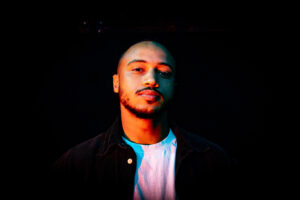
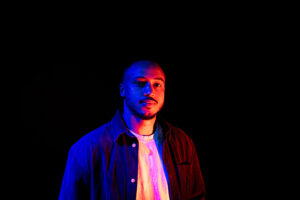
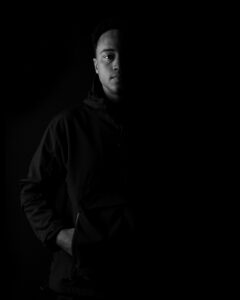
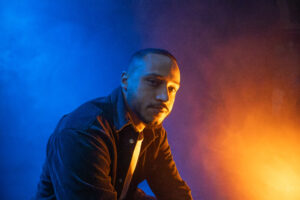
As he prepares for his debut at ‘In A Raw‘ on 31st May, alongside our resident, Rathod and In A Raw co-founder Kalesh E., we had the opportunity to explore his journey as a techno DJ and producer. He shared insights into the techno scene in his hometown of Johannesburg and in Cape Town, as well as advice for fellow techno artists and the wider community. Black Lake is an established producer and DJ who’s sound defies classification but seemingly has a knack in finding the more soulful side of electronic music, be it in his peak time sets, late afternoon openers,or off-kilter closings. His sets at TOYTOY where he currently holds a residency are known for breaking with stereotypes of dance music and being anything but predictable as he brings listeners sounds from all genres and spheres of his world of music.
- Monrhea
Let’s start with your name. Black Lake. I find it very interesting. What inspired the name?
- Black Lake
I would have been about 19, going on 20 maybe, and I was kind of playing around with a whole lot of names. Then I started thinking about the kind of sounds that resonated with me. A lot of it was inspiration from the idea of a water world of music. I mean, a lot of the music that I play feels very much like being underwater, or in some kind of body of water. So it’s quite hypnotic in that key. I suppose you could say the name Black Lake eventually came from different versions of the sounds I play.
That covers how you would describe your sound to someone for the first time?
Yeah, I mean, it’s really—I suppose it’s that being-in-the-water type of experience. I also look for really dreamy sounds, and I’ve always been drawn to music you can disappear into. I like long, extended tracks.
And does this also describe the kind of music you DJ?
Yeah, definitely. I mean, I don’t like to put myself in one box. So as much as I play techno, I also play house. Sometimes I’ll play drum and bass, breaks—those kinds of things. I’ve played some drum and bass events where I’m not playing full-on drum and bass, but more of the slower, liquid stuff—maybe even some chill music. I think there’s still a constant theme that runs through all the sets I play.
And your journey into techno music. How did you get into the sound and how has it evolved over time?
Yeah, I mean, looking back at it—probably during my high school days—I can’t even remember exactly how I got into DJing. I would go down YouTube rabbit holes, watching different sets, and see stuff on Facebook too. And I was like, okay, that looks pretty cool and fun. Eventually, I ended up downloading Virtual DJ onto my computer and started downloading music. I mean, I was still burning CDs back in the day—like making mix tapes and that kind of thing.
Back then, my style was completely different from what I play today. I originally got into South African house—more of the commercial styles of house that you’d hear on the radio and so on. Then I went through that EDM phase, which I suppose was kind of at its peak then. After finishing high school, I started going out to a few clubs.
Toy Toy was one club I hadn’t really experienced before finishing school. I went there one night with a friend, and that first night we didn’t stay too long—not because we didn’t like the music, but because we didn’t understand it. Then the next weekend came around and we were like, “Hey, should we go check that spot out again?” And from there, I just started falling more and more in love with the music and the genre
And just getting to experience really great artists—both local and international—really helped guide my sound. There were also smaller events during the week that I’d go to, which leaned more toward minimal sounds—slower, warmer, that kind of thing. It was a really nice, all-encompassing experience. You start to understand more about music.
Are there any other events you remember? You’ve mentioned Toy Toy—and we’ll talk about that in a bit—but are there any others that stood out? Even artists that inspired you?
Yeah, I mean, I have to give credit to Craig Van Rensburg. He and his brother, Grant van Rensburg, used to play some amazing sets—not just the main slots, but also really incredible openings and closings, which I really fell in love with. There was another set by one half of Chopstick & Johnjon, actually. And yeah, it’s more of a house act, but he played some really interesting, kind of driving stuff. Yeah those are some of the earlier sets that I experienced that really shaped my sound.
Then, more recently, I’d say one of the standout experiences was watching Scuba. That was a really special experience. And along with that, I’d probably say DVS1. Yeah, he’s been really influential in shaping how I think about putting together sets—how to start blending all these different styles of music, using tracks where, you know, the CDJ becomes more like an instrument, and you’re really playing around with the music.
Yeah, those are some of the acts.
From an audience perspective—thinking back to when you mentioned not really understanding the music the first few times you experienced techno—what are some of the things you did to try and understand it better? What kind of effort did you make to connect with the music?
I suppose it was really about showing up, spending time with the music, and being open to the experience. There were still times I didn’t completely understand what I was hearing, and that was okay. It was about letting go of the assumptions you bring into a space—what you think you like or don’t like—and being willing to listen to something different. I’d also speak with people who really enjoyed the music, just to understand what they connected with. I used that as an opportunity to learn. I think that’s what it really comes down to for me.
I’ve been to Toy Toy a few times and I heard you play and also these other guys called Shadowave with white masks who stood out.
Ah, yes, yes!
You’re a resident at ToyToy. What do you think earned you that place? And in your view, what does it take for an artist to become a resident DJ?
It’s not just about playing at the event you want to be a resident at. It’s really about consistency—showing that you’re dedicated to the art form and the music. That’s the main thing for me.
There are always ups and downs. You’ll play gigs where the room is empty, but you can’t let that discourage you. It can’t be about the hype. I think a lot of promoters are looking for that deeper connection—what it is that connects you to the music you’re playing.
If it’s only about hype, you can lose that passion very quickly when things don’t go your way. But when you have a deeper connection, there’s always something to fall back on. No matter what the gig looks like, there’s always something you can enjoy in it.
Okay, so when you say consistency—do you mean things like uploading mixes, sharing your productions, and staying active publicly as an artist?
Yeah, I think uploading—I’ve always been a bit bad with uploading content consistently, but yeah, back then I was uploading mixes pretty frequently.
But it’s also about consistency in sticking to the style you’re passionate about, rather than swaying with what’s popular or not popular at the time. That’s been really important to me.
I think that kind of consistency gives you a bit of uniqueness. When someone listens to your set, it shouldn’t just sound like any other artist. I don’t want to play something generic—I want to share something special.
When it comes to online presence—like promoters looking at your numbers to decide whether to book you—you mentioned the importance of sharing your work and sticking to your style. How do you balance standing out artistically regardless of the social media numbers or plays?
Yeah, I mean, it does play a bigger role these days than it used to. It’s still something I’m coming to grips with myself. I’ve never really been good at constant posting or keeping a regular schedule.
I feel that when I have something I really want to share, like a track or a commentary, I’m happy to post it. But sometimes, posting regularly can feel a bit like a job.
But yeah, I suppose it’s another way to connect with people. For me, it’s about finding a way to make it not feel like you’re just creating content, but actually using it as another kind of tool in your arsenal.
And how long have you been in the techno scene?
That would be about 10 years now.
Alright. Let’s dive into South Africa. What’s your take on the state of the Techno scene in South Africa right now?
Yeah, it’s interesting. I mean, it’s grown so quickly over the last couple of years — you’ve got loads of new promoters, events, and artists popping up. So that’s always promising. I think there’s a lot happening within it — a lot of different niche markets emerging, which is really exciting.
It’s a small scene from an audience perspective, so you’ve got a lot of different events trying to, I suppose, fish from the same pool. That can make things difficult when there are a few events happening on the same weekend or something like that. But I think there’s a lot of collaboration between artists and promoters at the moment, and yeah — that’s been really nice to see.
Okay, so at least techno has space in the electronic scene?
Yeah, I think there are always people trying something new and looking to learn — and you can tell when they’re in it purely out of passion and love for what they do.
Are there other communities aside, of course, from the Toy Toy you can mention?
I mean, there are a few events — kind of communities that are building up. There are the guys at Mary Jane’s Hacienda. They’ve got an event they do on Thursdays called The Loft, which is really nice because there was a period when there weren’t many mid-week events happening. So that’s kind of brought back a whole different sound now — more of a stripped-back one. And they’re really passionate about the music.
On the more techno side of things, you’ve got the people from MUUD Movement — they’ve been going at it for a few years now and have built a really strong community as well. You can always feel the energy at their events. Then also, there’s Underground Africa — a similar kind of community, same age group, and same level of energy.
In Cape Town, you’ve got Modular, which has all kinds of things going on. And then, among friends in Cape Town, there are some really interesting festivals happening — like Small Town Beat. I haven’t been to one myself, but from speaking with other artists whose opinions I respect, you can tell they’ve been pushing some really quality events and community down there.
What are some of the challenges you feel the scene in South Africa is facing?
That challenge of having a small audience to work with—it’s real. It seems like people reach a certain age and just stop wanting to go out. And that really doesn’t need to be the case. I’ve got lots of friends who are much older than me, and they’re still out regularly on the weekends.
So I think it’s more of a mindset thing, maybe a kind of conservativeness people fall into. And that’s one of the biggest challenges—this sort of drop-off of people from the scene as they get older.
At the same time, while it’s great to have loads of new artists entering the scene, sometimes it can feel like a flood. You’re trying to keep track of what everyone’s doing and figure out where you stand within it all. But I guess that’s just a constant challenge—whether it’s newer or older artists, it’s always going to be part of the evolution of the scene.
From the outside looking in, how do you view the Kenyan scene? Are there any artists you’re already following?
Yeah, I mean, I haven’t known too much about the Kenyan scene, but from chatting with Rathod and some other artists from here who’ve played up there, it sounds like it’s a really burgeoning scene. And from what I’ve heard, it seems to be an authentic one.
It’s exciting to hear that there’s another scene on the African continent where people have like-minded approaches to music and events. That’s really encouraging—and quite exciting, to be honest.
I’m curious about the artists you mentioned who played here and shared insights about the scene.
So that was just Fabio, one of the founders of Toy Toy. He played in Kenya a few years ago.
Oh, yes. Okay. Nice. What do you think can be done to build bridges between our scenes?
I suppose it’s really about… yeah, these kinds of events where you have artist exchanges, but also exchanges of music, and people collaborating with labels. For those producing podcasts or mixes—especially since we’re both in Eastern and Southern Africa—it’s about working together to create this… this scene, I suppose.
A unified approach to music because it opens up so many opportunities, not just within the continent, but also by bringing in international artists and fostering collaborations between events. Imagine artists performing in East Africa one week and Southern Africa the next. It makes things more accessible for artists, while drawing audiences eager to discover new voices and experiences… different people, different sounds.
Would love to tap into your vision of techno in Africa.
Yeah, it’s an interesting one. I’ve been working on some projects with friends—I won’t go into detail right now, as they’re still in early stages—but the goal is to create something that’s not about defining a singular ‘African sound’ (which I worry could come off as cheesy). Instead, it’s about using music as a space to share our worldview, opinions, and feelings about the world. That’s always been the role of music, if you look back—like the early days in Detroit, with its musical resistance and rebellion. Those politically charged studios where people created raw, urgent art… That’s the spirit I’m drawn to. Not always overtly political, but tied to what I’m feeling, what I want to say. If we create spaces that let artists do that, you’ll see more starting… more possibilities.
I also think there are so many multidisciplinary artists on the continent. I’d love to see more collaborations—visual artists working with sound artists, for example—to build these larger, layered projects together.
This ties into my next question: What core cultural or sonic elements do you think give African techno its unique essence? But even before that—how would you define African techno? Is the term helpful right now, or is it just… a limiting title?
You know, I’ve never deeply considered the concept of ‘African techno’ as a defined genre. Here in South Africa—especially Joburg—it’s always been a melting pot of sounds and styles. There’s no single ‘sound’ you can pin down. But there’s definitely a rhythmic, groove-driven energy in Johannesburg’s clubs. When you watch crowds here, it’s not just the music—it’s the way people move. International artists tell me the audiences feel different here compared to elsewhere in the world. People aren’t just listening; they’re living the music. So maybe ‘African techno’ isn’t about a specific sound—it’s the audience that shapes the experience.
From a purely sonic angle, I can’t point to one defining trait. But naturally, there’s a tilt toward rhythm and groove—elements that cut through everything. Then there are all these other cultural elements—like fashion, art, and local DJs—that feed into what people here consider ‘good music.’ It’s messy, but that’s what makes it alive. But maybe that’s the point—it’s not about locking down a sound, but about the way people live it.
But even on the parts of African techno, sampling traditional music in a way of preserving our roots. What do you think of this?
Yes. There’s always a wealth of things to sample from. A while back, probably late ’90s or early 2000s—that got sampled in a track I can’t remember the name now. But the way it had been sampled and blended the sounds was so unique. I remember hearing the sample kick in and thinking, This is special. I’ve only played it a couple of times, but every time I play it, you can see the audience’s strong reaction—it really connects. I think there’s a lot of power in vocal elements specifically— strong samples to pull from people with strong voices
And for the audience, I agree with you. Even just comparing how I felt to the audience in Johannesburg—I don’t know—I felt connected to the soul of the place. There is definitely something about it. Especially with, well, it was a deep house event at Chronical Deep’s Album Launch. But there is something about the Black community coming together—it was quite special.
All right. So, you’ll be doing your debut performance in Nairobi. How do you feel about that?
I’m really ready and looking forward to it. As I said, it’s my first time in Nairobi, so I have little idea what to expect—but I’m genuinely excited. It’s going to be an extended set, which I always enjoy. You get to take people on a journey, play with sounds, and explore what connects. I’m especially eager to see which sounds Nairobi resonates with
Okay, and then you have a vision for yourself? Being part of this scene, start then you see how it goes moving forward?
Moving forward, I mean, for a long time I’ve kind of just been going with the flow, seeing how things unfold. But now, as I mentioned, there are a few projects I’m starting to work on, which I hope will give me the opportunity to help shape the scene a bit more—add my two cents, so to speak—and create a platform for other artists to share their work, especially those who might not have had the chance elsewhere.
Collaboration is a big part of that, and it’s definitely something I’m looking forward to.
What does techno mean to you?
That’s an interesting question. Yeah, it means a lot of things to me. At its core, I’d say it represents freedom of expression—an opportunity to share moments with others, especially with people who are close to me. It’s played a really important role in my life. Honestly, most of the things I have now have come from being part of the scene. It’s something that brings people together in a meaningful way.
And what advice would you give an artist looking to start a career in techno music?
I suppose I’d say—don’t be afraid to experiment. Don’t feel like everything has to follow a set formula. There’s no single way to get things ‘right.’ If you look at some of the music that’s truly broken boundaries and crossed genres over the years—those iconic, connector records—it’s usually been the stuff that defied the norm of its time. So yeah, don’t feel like you have to fit the mold. What’s cool is breaking it.
All right! That’s mostly it. Unless you have any lingering thoughts you’d like to share with the community.
Yeah, I’m really excited for this opportunity—to play, to experience, and connect with a kind of sister country. I’m really looking forward to it. I also see this as the beginning of something—hopefully a starting point for deeper collaborations that go beyond just this one event. That’s something I’m genuinely looking forward to.
Okay cool. Thank you so much for your insights, for sharing your journey. We’re looking forward to experiencing you!